
BIOLOGY
Algal blooms facing global change (ALGA):
monitoring all colors of the rainbow in Lake Geneva
(Authors: Mathilde Dugenne, Irene Muscas, Mridul K. Thomas, Lisa Morales, Zoé Kettiger, Salomé Boudet, Verónica Ramirez Wong, Phaedra Rickenbacher and Bastiaan W. Ibelings, Microbial Ecology team, UNIGE – 11.2026)
What is the ALGA project?
ALGA is an interregional project (Interreg funding, 2023–2026) bringing together Swiss and French research institutions working on Lake Geneva. Its aim is to better understand the mechanisms driving current algal and cyanobacterial blooms (collectively referred to as phytoplankton), despite the lake’s recovery following eutrophication (re-oligotrophication).
At the University of Geneva, we monitor plankton populations using images collected at high frequency (several times a day) and at different depths (3.5 to 40 m) from the LéXPLORE platform (Figure 1). These observations help us track bloom-forming species and alert CIPEL when potentially harmful species, such as toxin-producing cyanobacteria, reach significant abundances.
We also investigate the factors influencing these populations, including water movements, resource availability and biological interactions with parasitic fungi, zooplankton, and mussels. By combining high-resolution observations with laboratory experiments, we aim to identify what conditions promotes or terminates blooms (Figure 2).
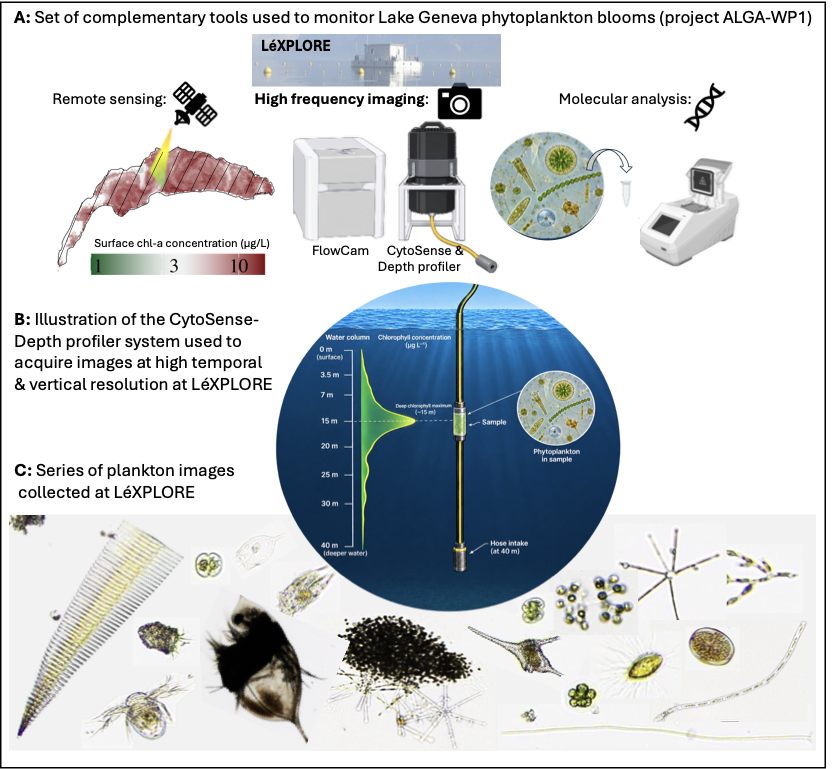
Figure 1: Near-real-time monitoring and early warning of phytoplankton blooms in Lake Geneva
(A) Three complementary approaches used to monitor algal and cyanobacterial blooms: satellite remote sensing, which provides daily estimates of surface algal biomass (chlorophyll-a); high-resolution imaging, which tracks plankton populations at different depths and frequencies (daily or subdaily); and molecular analyses, which provide more precise species identification and information on their toxin-producing potential, but require occasional sampling.
(B) CytoSense-Depth profiler installed on the LéXPLORE platform. This automated instrument collects plankton images every four hours at seven depths, between 3.5 and 40 m.
(C) Examples of planktonic organisms observed at LéXPLORE using FlowCam (daily surface imaging – Flowcam Micro images in the 10-100 µm size range and Flowcam Macro in the 100-10000 µm size range, daily resolution) and CytoSense (CytoSense images – multiple daily images at different depths): diatoms, green and golden algae, cyanobacteria, parasitic fungi and zooplankton.
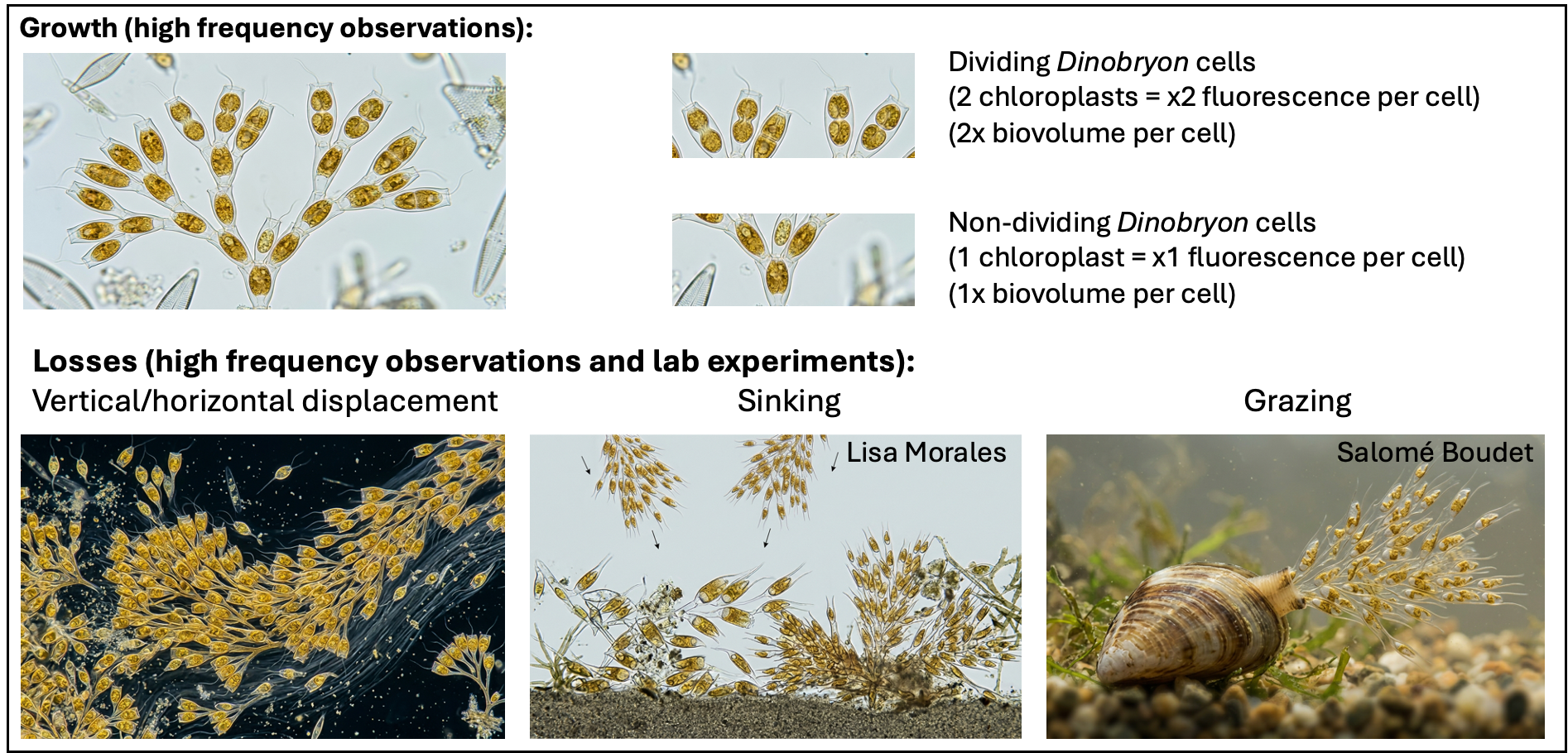
Figure 2: Main ecological processes influencing the phytoplankton populations monitored at LéXPLORE (illustrated here by a Dinobryon colony, AI generated images). Observations and experiments are used to assess their growth and loss rates, and understand what environmental conditions lead to their imbalance, thereby promoting blooms in Lake Geneva.
What are phytoplankton blooms and what are their impacts?
Phytoplankton blooms are natural phenomena that form part of the seasonal ecological succession of temperate aquatic ecosystems.
Phytoplankton plays an essential role in aquatic ecosystems: it forms the basis of aquatic food webs, contributes to CO₂ uptake and produces some of the oxygen present in the atmosphere.
However, excessive blooms can disrupt ecosystem functions and human activities, including fisheries, drinking water supply and recreational activities (Jacquet et al. 2024). They can also pose ecological and health risks when they cause oxygen depletion in the water or involve species that produce toxins, strong odours or unusual water colouration (Figure 3).
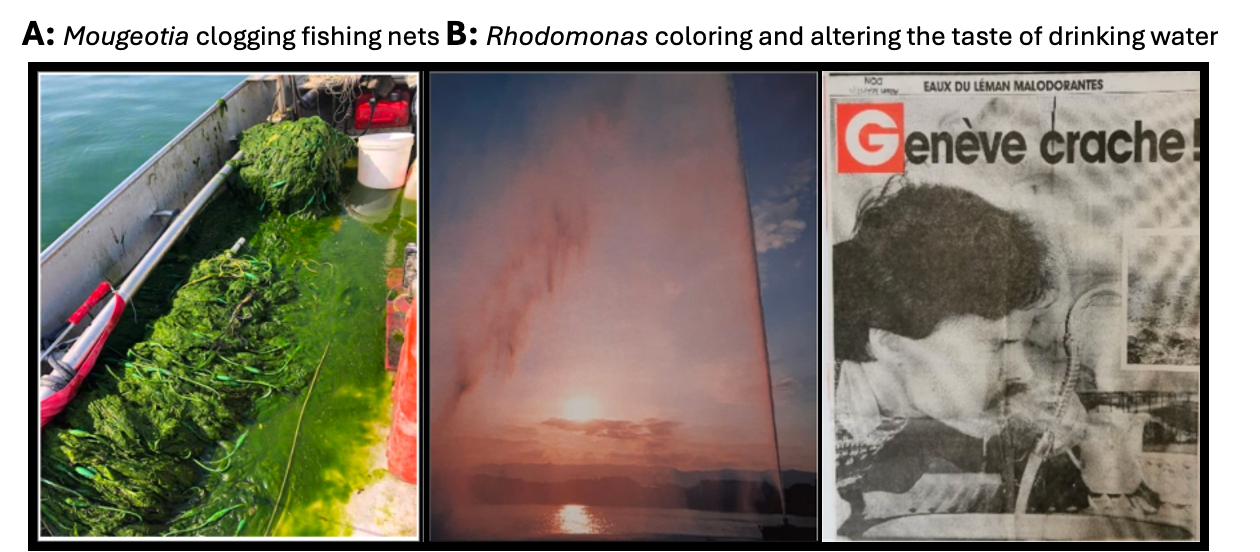
Figure 3: Photographs and newspaper articles illustrating the impacts of algal blooms on Lake Geneva’s ecosystem services, particularly fisheries (A) and drinking water supply (B).
From: S Jacquet, Frédéric Soulignac, O. Anneville. A complete overview of algal blooms in Lake Geneva: shall the past shed light on the future?. Aquatic Sciences – Research Across Boundaries, 2025, 88, pp.3. https://doi.org/10.1007/s00027-025-01234-7. Original credits: INRAE CARRTEL, Druart & Balvay (2007), Lémaniques.
The 2026 blooms observed at LéXPLORE: all the colours of the rainbow!
In October, with Halloween approaching, Lake Geneva also turned red (Figure 4).
On October 14th, our team collected plankton using a net, preparing a series of laboratory experiments to understand how phytoplankton consumers, particularly Quagga mussels (Figure 5) and Daphnia zooplankton, can promote or terminate blooms through selective feeding.
We hypothesise that certain characteristics, such as toxin production in cyanobacteria or colonial and filamentous forms in some algae, provide protection against grazing and give certain species a competitive advantage. Conversely, organisms such as parasitic chytrid fungi can also limit blooms, hence we specifically identify algae infected with chytrid to characterize the wave of parasitic infections and their consequences on blooms formation/termination (see the infected Asterionella colony in Figure 1C and the upcoming blog post by Lisa Morales, a PhD candidate at UNIGE working on the PARADILAC project at LéXPLORE).
This research could help explain the succession of blooms observed in Lake Geneva in 2026 (Figure 6).
According to satellite observations, the first bloom occurred in March and was dominated by cyanobacteria (blue-green algae) and Cryptomonas, as identified through automated CytoSense imaging and microscopic analyses (Figure 6C).
The spring bloom occurred between May and June, with a succession of golden diatoms, particularly Asterionella and Synedra (Figure 6C), which were affected by several waves of parasitic infections (Figure 1C).
Finally, several blooms occurred during the summer-to-autumn transition. In early September, Dinobryon and diatoms, both characterised by their golden pigments, were present in similar proportions. They were gradually outcompeted by the red filamentous cyanobacterium Planktothrix rubescens (Figure 6C).
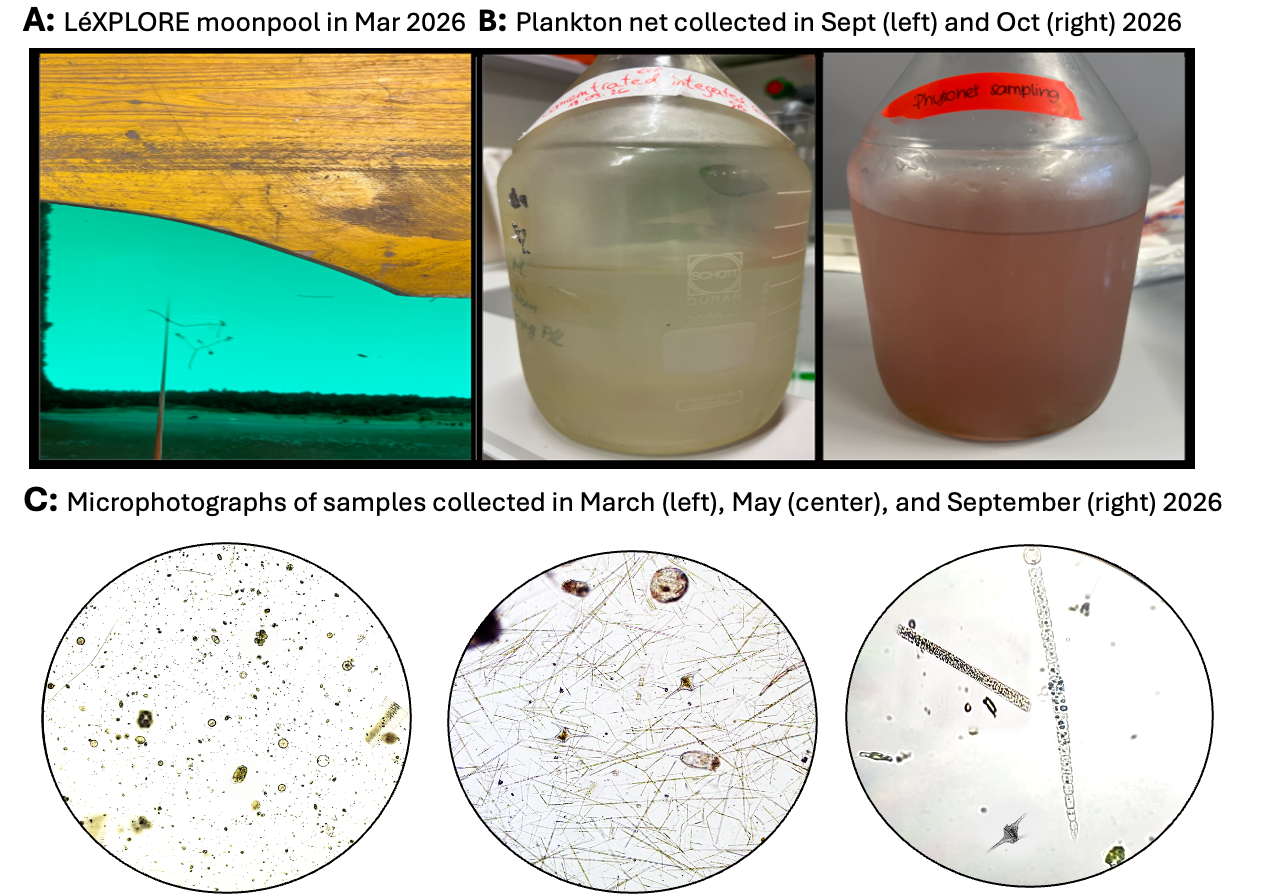
Figure 4: The rainbow colours of the 2026 phytoplankton blooms.
(A) Photograph of the LéXPLORE platform’s moon pool during the cyanobacterial (blue-green algae) and cryptophyte bloom observed in March 2026. Colours not altered.
(B) Concentrated plankton samples collected using nets, showing a golden-brown colour (left) during the algal bloom and a red colour (right) during the cyanobacterial blooms observed in September and October 2026.
(C) Microscopic images of plankton communities during the blooms of March (left), May (centre) and September/October (right) 2026. Credits: Lisa Morales and Zoé Kettiger (PARADILAC project).
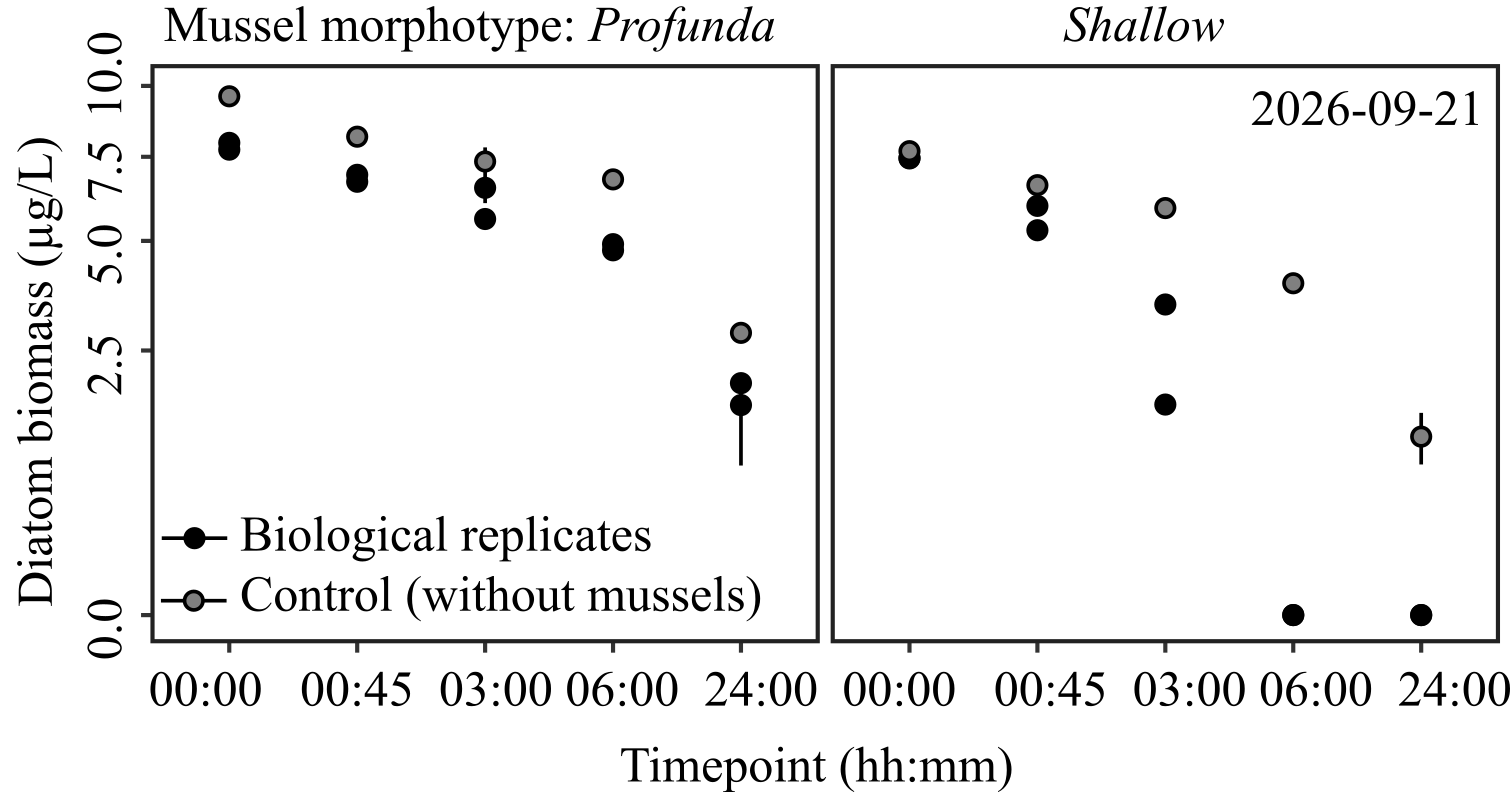
Figure 5: Example of grazing incubation, in which we fed two Quagga mussel morphotypes, the Shallow (collected between 15-20m) and Profunda (collected between 55-60m) morphs, a concentrated plankton sample collected in September 2026 and follow the consumption of bloom-forming phytoplankton over 24h. Credits: Phaedra Rickenbacher (Master thesis), Salomé Boudet, Mathilde Dugenne
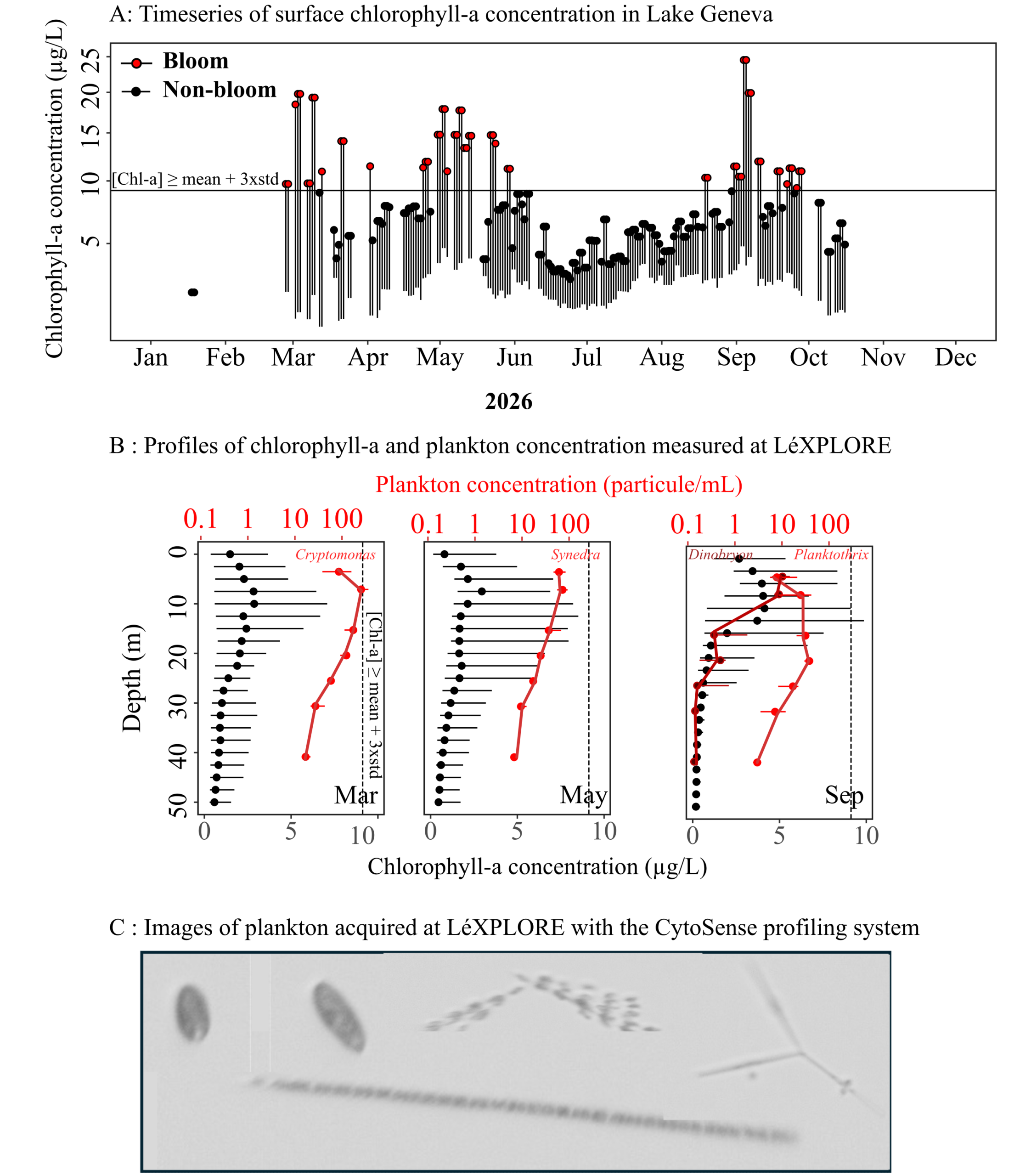
Figure 6: Monitoring phytoplankton blooms in Lake Geneva in 2026.
-
Changes in surface chlorophyll-a concentration, estimated from satellite observations and used as an indicator of phytoplankton biomass. Red dots indicate areas where concentrations exceed the bloom threshold. The absence of data in January and February is due to cloudy conditions.https://www.alplakes.eawag.ch/map/geneva?layers=satellite_chlorophyll
-
Vertical profiles of chlorophyll-a (black dots) and plankton concentration (red dots) measured at LéXPLORE. In October 2026, a deep bloom between 10 and 15 m was detected, which was not visible in satellite observations restricted to the surface layer.
-
Examples of organisms observed during the 2026 blooms: Cryptomonas, a Dinobryon colony, a Synedra colony infected by parasitic chytrid fungi, and the red filamentous cyanobacterium Planktothrix.