
CALCIGEN: Calcite precipitation dynamics in Lake Geneva
This project investigates the role of calcium carbonate precipitation (CP) in carbon cycling within freshwater systems, a process often overlooked compared to biological metabolism. Focusing on Lake Geneva, the CALCIGEN project combines high-frequency sensor data and detailed water sampling at the LéXPLORE platform to better understand how physical, chemical, and biological processes interact to control carbon transformations.
Preliminary results show that during summer stratification, intense primary production in surface waters is closely linked to calcite precipitation, reflected by changes in pH and conductivity. The study also highlights the dominant role of picocyanobacteria, whose growth coincides with periods of enhanced carbonate precipitation. Microscopic analyses further suggest that these microorganisms may directly contribute to the formation of calcite crystals. Overall, the project provides new insights into the coupling between biological activity and inorganic carbon processes, improving our understanding of carbon dynamics in large lakes.

Nicolas Escoffier, senior researcher, UNIL
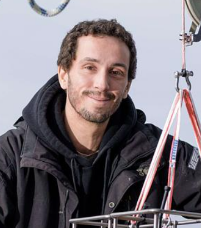
Jérémy Keller, technician, EPFL
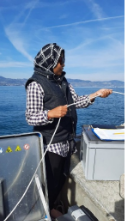
Santona Khatun, senior researcher, EPFL

Marie-Elodie Perga, Professor in Limnology, UNIL