
Introducing the zooplankton family of Lake Geneva (06.2026)
Have you ever come across the word “plankton” before? Do you know what they are and how important they are for the health of our global aquatic ecosystems?
If you’re not often involved in natural sciences but enjoyed watching “SpongeBob”, you might know “Sheldon J. Plankton” and his “Evil Plankton Family” (Fig. 1). This family, introduced in the series, resembles Calanoida zooplankton, found in most aquatic systems like Lake Geneva. Calanoids are not the only taxa there, and more importantly, there’s absolutely nothing evil about them. Zooplankton are vital for healthy ecosystems; without them, these ecosystems would struggle. Now, let’s explore the fascinating world of plankton a bit more, focusing on Lake Geneva.
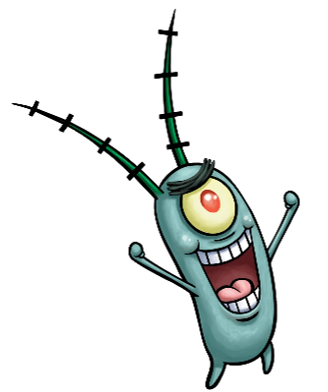
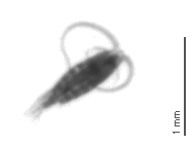
Figure 1: Sheldon J. Plankton (left) (Image retrieved from https://spongebob.fandom.com/wiki/Sheldon_J._Plankton)
Calanoid zooplankton from Lake Geneva (right) (Image scanned using Zooscan, processed by Nischal Devkota, 2024).
There are two main types of plankton: “phytoplankton” and “zooplankton.” Phytoplankton are autotrophic, producing their own food, while zooplankton are heterotrophic, feeding on other organisms, mainly phytoplankton. The Fragilaria spp. mentioned in previous blogs about Benjamin Storm are phytoplankton. Lake Geneva hosts many zooplankton families, including Calanoida, Cyclopoida, Daphniidae, Leptodorridae, and Cercopagididae (Fig. 2). There is also another phylum of zooplankton, Rotifera (also called ‘wheeled animals’). Zooplankton form a mini-food web; Calanoida and Daphniidae are herbivorous, Leptodorridae and Cercopagididae are carnivorous, and most Cyclopoida are omnivorous and may feed on detritus.
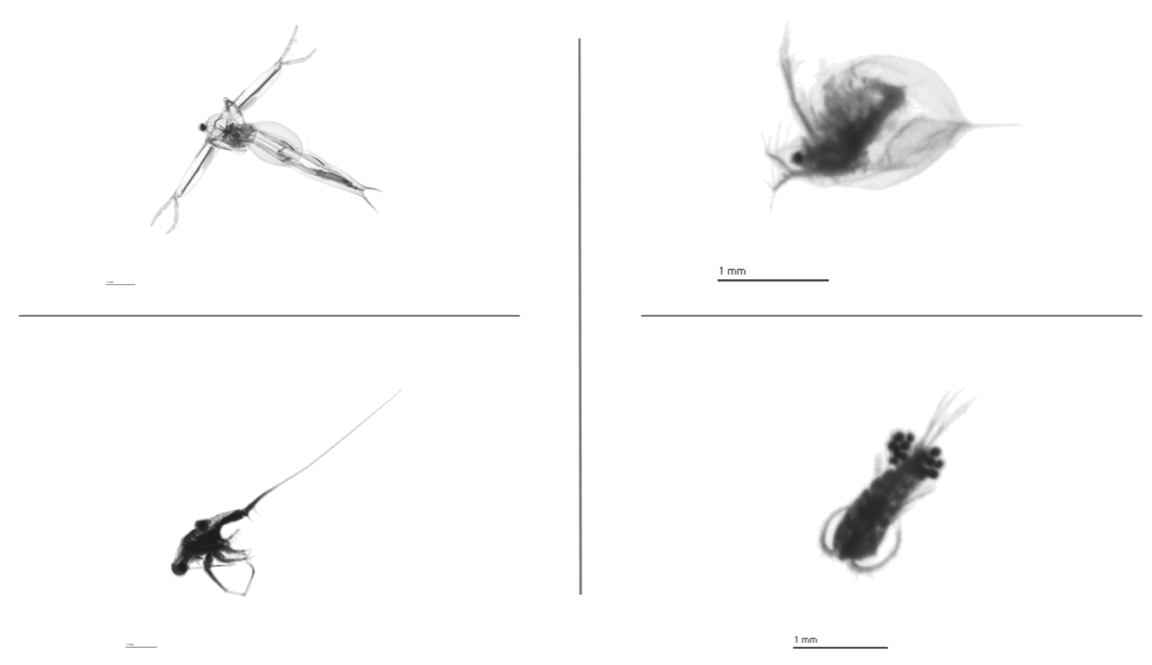
Figure 2: Common zooplankton from Lake Geneva: Leptodorridae (Leptodora sp., top-left), Daphniidae (Daphnia sp., top-right), Cercopagididae (Bythotrephes sp., bottom-left), and Cyclopoida (bottom-right). [Image scanned using Zooscan, processed by Nischal Devkota, 2024].
What could happen if zooplankton disappeared from Lake Geneva or their numbers dropped to very low levels? Two key groups that would be strongly affected are phytoplankton and fish. Zooplankton are a key food source for many fish, especially young ones, so their decline could harm fish populations. Fewer zooplankton could also lead to unchecked phytoplankton growth and more algal blooms. Interestingly, in some shallow lakes, increasing zooplankton through fish management has been used to control harmful algal blooms.
Zooplankton also exhibit a fascinating behavior that you’ll find truly interesting. They engage in diel vertical migration (DVM), moving to deeper waters every day to avoid predators and returning at night to feed on phytoplankton. This behavior greatly influences the global biological pump. Basically, atmospheric carbon and nutrients like phosphorus in surface waters are used by phytoplankton, which are then eaten, transported, and discarded by zooplankton, aiding in the transfer and storage of these nutrients. Scientists have established this in the ocean, but it raises an intriguing question: Do zooplankton, especially in deep lakes like Lake Geneva, do the same? The LAKES Group at the University of Lausanne has been exploring this very question through an exciting project called “GEN-Z”, part of the LéXPLORE initiative. At LéXPLORE, zooplankton migratory patterns are also being studied using acoustic sensors, which can be visualized on the Datalakes (Fig. 3)online platform.
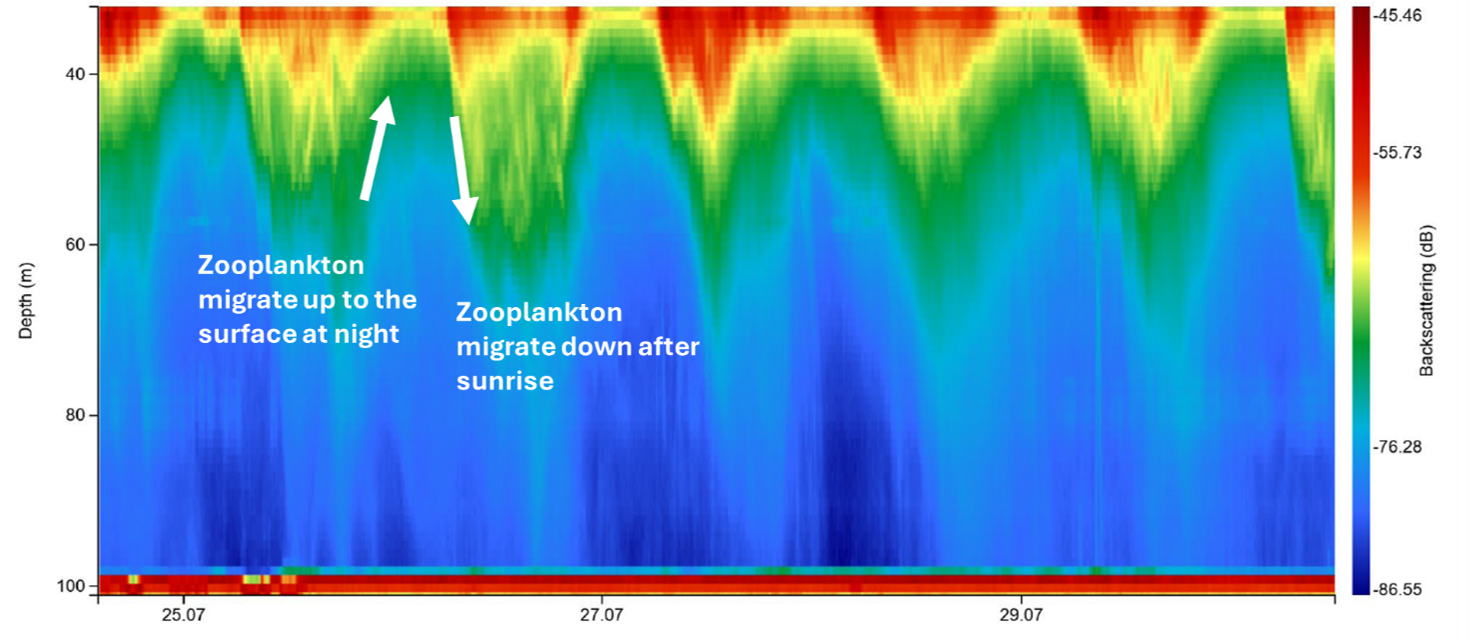
Figure 3: Raw acoustic backscattering measurements taken using an upward-facing, 300 kHz Acoustic Doppler Current Profiler (ADCP) in Lake Geneva. The x-axis denotes the time when the measurement was taken, i.e., from 24 July (12hrs) to 30 July 2024 (12hrs). The figure was downloaded directly from Datalakes on 24 February 2024.
Stay tuned, more fascinating discoveries are coming!